Disability Insurance in Canada: Protect Your Income When You Can’t Work
Disability insurance in Canada helps replace a portion of your income if illness or injury prevents you from working, so you can continue covering everyday expenses while focusing on recovery.









Why Canadians Choose Disability Insurance
Canadians choose disability insurance because their income is their most important financial asset. A long-term illness or injury can disrupt earnings for months or even years, while bills and responsibilities continue.
Disability insurance provides ongoing income support when work is not possible. Unlike coverage that pays a one-time benefit, disability insurance is designed to replace a portion of your regular income over time, offering stability during extended recovery periods.
This type of coverage is often used to complement government benefits and workplace plans, which may provide limited support or end sooner than expected. For many Canadians, disability insurance plays a central role in protecting their lifestyle, savings, and long-term financial plans.
How Disability Insurance Works
Disability insurance follows a clear structure designed to help protect your income if you are unable to work.

You choose your coverage and benefit structure
Coverage is based on your income, occupation, and how much income replacement you want if illness or injury prevents you from working. Policy features such as waiting period and benefit duration are selected upfront.

A qualifying illness or injury triggers eligibility
If an illness or injury prevents you from working and meets the policy’s definition of disability, you may submit a claim after the waiting period has been satisfied.

Monthly benefits are paid while you remain eligible
Once approved, disability insurance pays a monthly benefit to replace part of your income. Payments continue as long as eligibility conditions are met, up to the policy’s maximum benefit period.
The goal is simple: maintain financial stability while recovery takes priority.
What Disability Insurance Typically Covers
Disability insurance does not focus on specific diagnoses. Instead, coverage is based on whether an illness or injury prevents you from performing your job or earning income, as defined in the policy.
Covered situations may include serious illness, injury, chronic conditions, or mental health challenges, provided they meet the contract’s disability definition. Because eligibility depends on how disability is defined, understanding policy wording is critical when comparing options.
Why Choose Panda7 for Disability Insurance in Canada

Alexis Terriault
One of the only if not the only insurance brokerage firm dedicated to sustainable development. One of the only insurance brokerage firm committed to sustainable development.

Anabelle Veale
Great customer service! Really appreciated my experience!

Clément Meunier
I recommend ! They gave me the cheapest price! Very attentive and accommodating.

Guillaume Dumouchel
Courteous and professional agent. Quick quotes that met our needs.

Sina Channel
Wow very good customer service! Thanks to Amine more precisely, I highly recommend!

Alexandra Martin
I enjoyed my experience with Panda7. It's easy to get a good price for the insurance that's right for us. I'm satisfied.
Alexis Terriault
One of the only if not the only insurance brokerage firm dedicated to sustainable development. One of the only insurance brokerage firm committed to sustainable development.
Anabelle Veale
Great customer service! Really appreciated my experience!
Clément Meunier
I recommend ! They gave me the cheapest price! Very attentive and accommodating.
Guillaume Dumouchel
Courteous and professional agent. Quick quotes that met our needs.
Sina Channel
Wow very good customer service! Thanks to Amine more precisely, I highly recommend!
Alexandra Martin
I enjoyed my experience with Panda7. It's easy to get a good price for the insurance that's right for us. I'm satisfied.
Compare Disability Insurance Quotes in Canada
Compare disability insurance options from licensed insurers and understand how definitions, benefits, and costs differ, with clarity and confidence.
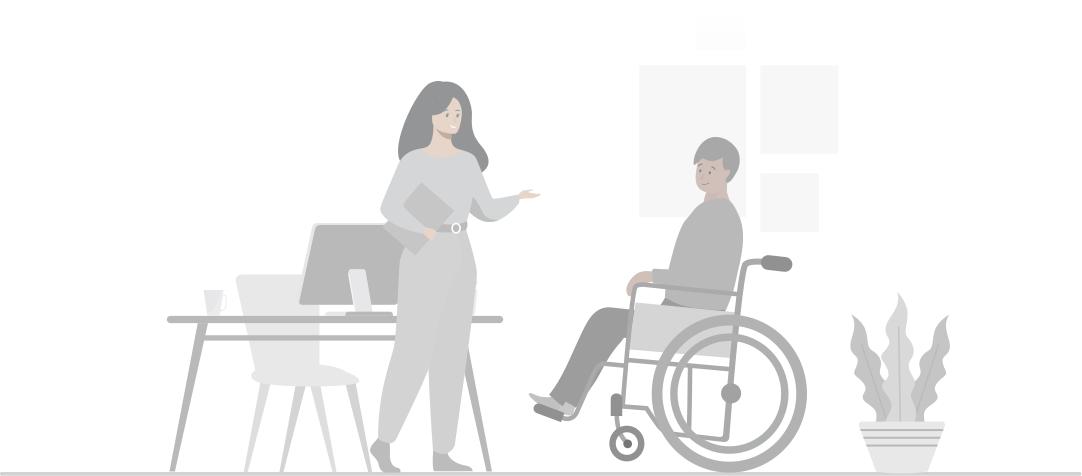
Types of Disability Insurance in Canada
Disability insurance is available in several forms

Short-Term Disability Insurance
Designed to cover temporary income loss, often for a few months. This type of coverage is sometimes provided through employer benefit plans.

Long-Term Disability Insurance
Provides income replacement for extended periods, potentially lasting years or until retirement age. Long-term disability insurance is the foundation of most individual disability policies.

Own-Occupation vs Any-Occupation Coverage
Own-occupation coverage pays benefits if you cannot perform your specific job, even if you could work in another role. Any-occupation coverage requires that you be unable to work in any reasonable occupation to qualify.

Disability Insurance for Self-Employed and Professionals
Often customized for business owners, contractors, and professionals whose income depends directly on their ability to work.
Disability Insurance vs Critical Illness Insurance
Disability insurance and critical illness insurance protect against different financial risks. They are often complementary rather than interchangeable.
| Feature | Disability Insurance | Critical Illness Insurance |
|---|---|---|
| What triggers a payout | Inability to work due to illness or injury | Diagnosis of a covered illness |
| Type of benefit | Monthly income replacement | One-time tax-free lump sum |
| How payments are made | Paid monthly while eligible | Paid once after claim approval |
| How funds can be used | Intended to replace income | Any purpose |
| Timing of payout | After a waiting period | Shortly after diagnosis |
| Duration of benefits | Ongoing while eligible | One-time payment |
| Focus of protection | Income stability over time | Financial flexibility at diagnosis |
| Can both be held together | Yes | Yes |
Many Canadians hold both types of coverage. Disability insurance protects long-term income, while critical illness insurance provides immediate flexibility after a serious diagnosis.
Is Disability Insurance Different by Province?
Disability insurance is offered nationally, but insurance is regulated at the provincial level. While the core structure is consistent across Canada, contract wording, disclosure rules, and consumer protections may vary.
Quebec follows a civil law system, while most other provinces operate under common law. Panda7 helps you compare disability insurance options with province-specific context, including dedicated guidance for Quebec and Ontario.
Cost of Disability Insurance in Canada
The cost of disability insurance depends on factors such as age, health, occupation, income level, benefit amount, waiting period, and benefit duration.
Higher-risk occupations and more comprehensive definitions generally result in higher premiums. Pricing can vary significantly between insurers for similar coverage structures.
Comparing disability insurance quotes across multiple insurers is the most reliable way to understand cost and value.
Disability Insurance Canada FAQ
Disability insurance provides monthly income replacement if illness or injury prevents you from working and you meet the policy’s definition of disability. It is designed to protect your income when your ability to earn is interrupted for an extended period.
You choose coverage based on your income, occupation, and desired level of protection.
If you become unable to work due to illness or injury and meet the policy definition, you can submit a claim. After any waiting period, the insurer pays a monthly benefit to replace part of your income while you remain eligible.
Disability insurance covers loss of income when an illness or injury prevents you from working, as defined in the policy. Coverage is based on functional ability to work, not on a specific medical diagnosis.
Covered causes may include:
- Physical illness or injury
- Chronic conditions
- Mental health conditions, subject to policy terms
Understanding how disability is defined in the contract is essential when comparing policies.
Many policies include coverage for mental health conditions such as depression or anxiety, but benefits may be subject to specific definitions, waiting periods, or duration limits. Coverage details vary by insurer and policy.
- Own-occupation coverage pays benefits if you cannot perform your specific job, even if you could work in another role.
- Any-occupation coverage requires that you be unable to work in any reasonable occupation suited to your education, training, or experience.
Own-occupation coverage generally costs more but offers stronger protection, especially for professionals and specialized occupations.
Benefit duration depends on the policy you choose. Some policies pay benefits for a fixed period, such as two, five, or ten years, while others can pay benefits until a specific age, often age 65 or retirement age.
Longer benefit periods provide stronger long-term protection but usually come with higher premiums.
The waiting period, also called the elimination period, is the time between becoming disabled and when benefits begin. Common waiting periods include 30, 60, 90, or 120 days.
Longer waiting periods generally reduce premium costs but require more savings or short-term support during the initial phase of disability.
The right amount depends on your income, living expenses, savings, and other benefits you may have. Most policies replace a portion of income rather than 100 percent.
Many Canadians aim to cover essential expenses such as housing, food, utilities, and debt payments without relying heavily on savings or credit.
Disability insurance is often worth it if losing your income would significantly impact your financial stability. For many Canadians, income is their largest financial asset, and government or workplace benefits may not provide sufficient long-term support.
Cost depends on factors such as age, health, occupation, income level, benefit amount, waiting period, and benefit duration. Higher-risk occupations and more comprehensive definitions typically result in higher premiums.
Comparing disability insurance quotes across insurers is the best way to understand cost and value.
Tax treatment depends on who pays the premiums.
If you pay premiums personally with after-tax dollars, benefits are typically tax-free.
If premiums are paid by an employer and deducted as a business expense, benefits may be taxable when received.
This distinction can significantly affect net income replacement.
Yes. Many Canadians hold both. Disability insurance replaces income over time if you cannot work, while critical illness insurance provides a one-time lump sum after a qualifying diagnosis. Together, they address different financial risks.
Yes. Disability insurance is especially important for self-employed individuals, business owners, and contractors who do not have employer-provided benefits. Coverage can often be tailored to income structure and occupation.
Yes. Most individual disability insurance policies can be cancelled at any time. Premiums already paid are not refunded.
You choose a benefit amount, select policy features such as definition of disability and waiting period, complete an application, and compare insurers. Panda7 helps you compare disability insurance options clearly, without pressure.
Protect Your Income With Confidence
Disability insurance helps protect your ability to earn when health challenges arise. With Panda7, you can compare disability insurance options in Canada and choose coverage that fits your priorities, clearly and confidently.